Power and the bay
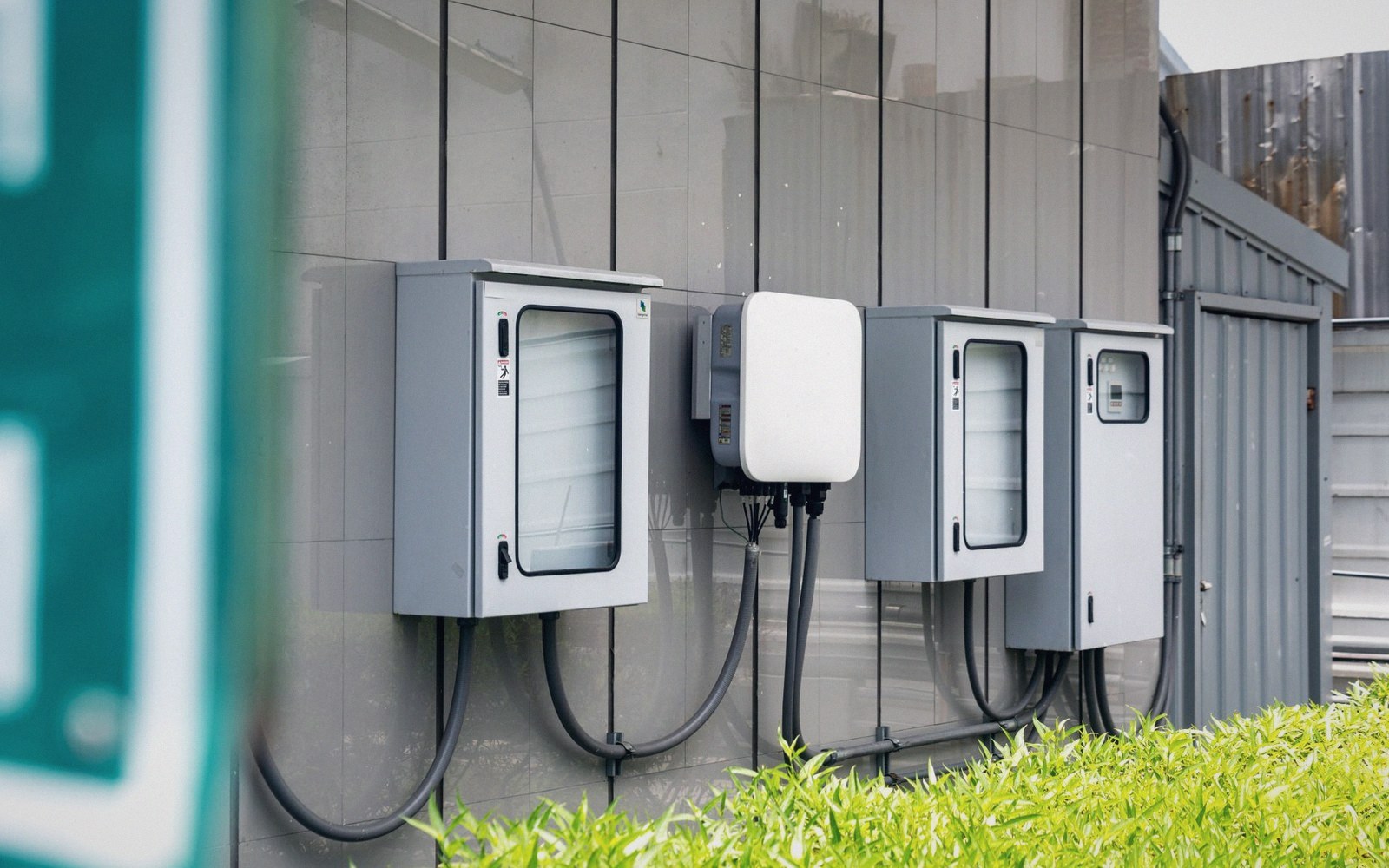
Ordered in advance by the kilowatt, and never quite where the drawing wanted it.
Photo: panumas nikhomkhai / PexelsThe outlet is where it is, not where you need it
Every hall charges for power by the kilowatt, ordered in advance on a form that asks you to commit to a load before the stand is fully designed. Underestimate and you cannot add a circuit on-site without paying a premium and waiting for a hall electrician to appear. Overestimate and you pay for capacity you never use. The number you submit is also a legal declaration: the hall's incoming supply is engineered around the aggregate of every stand's order, so nobody's rounding up is harmless.
The drop itself — a single armoured cable or a pillar of sockets terminated somewhere in your bay — lands at a position determined by the floor grid, not by your layout. It will be at the back of the stand if your machinery is at the front. The cable run from that drop to every consumer on the stand is therefore your problem, which is why power is planned before the deck goes down, not after. Chasing a run through a finished raised floor is a half-day's work and a structural risk to the decking.
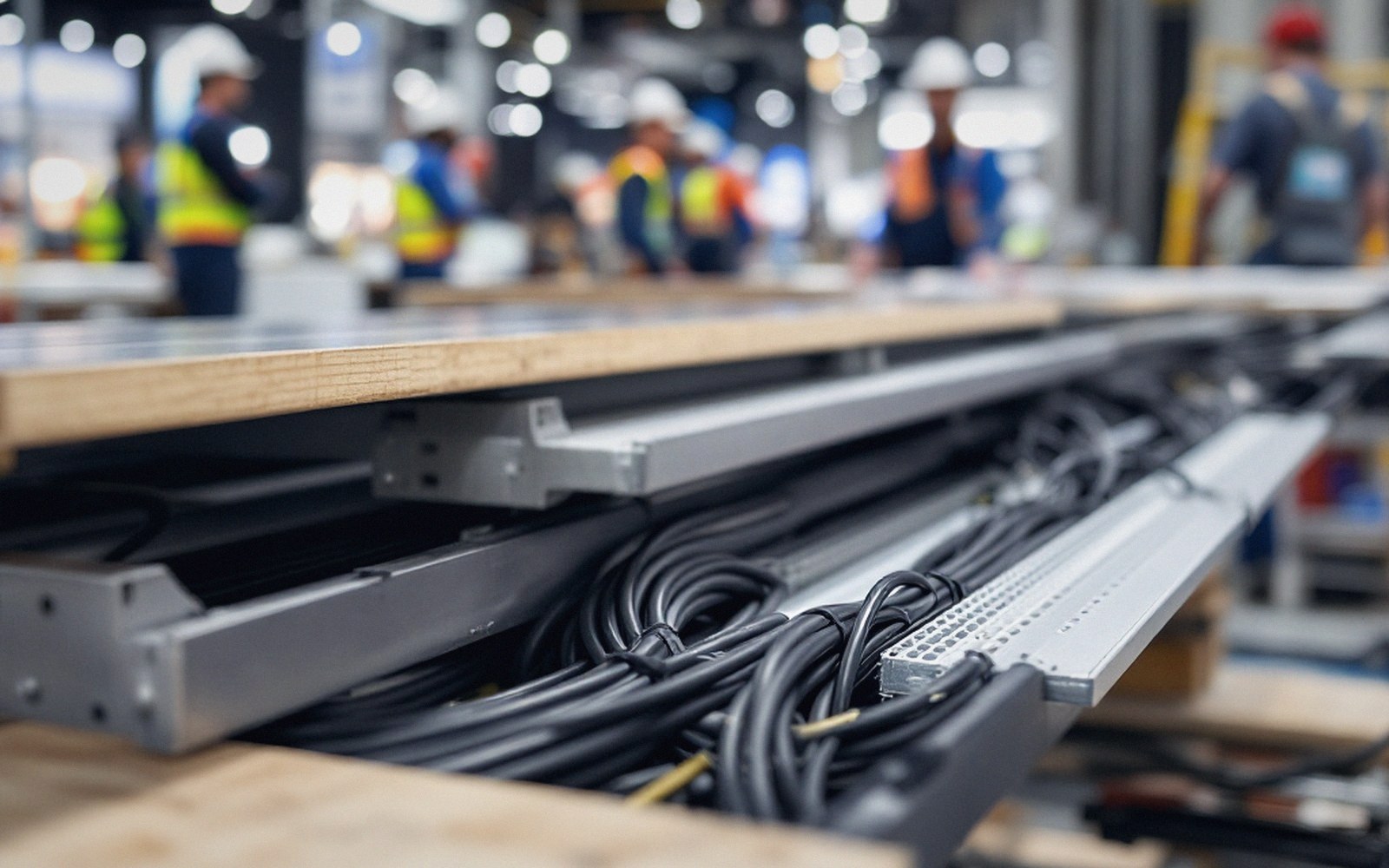 Fig. 02
Distribution is the first thing built and the last thing anyone draws.
Distribution boards inside the stand are almost always contractor-supplied: a DIN-rail board with MCBs sized to each circuit, labelled, and presented to the hall electrician for inspection before the supply is energised. Some halls require an approved contractor to make even the final connection; others will accept any competent builder who can show a current electrical certification. Know which regime applies before load-in begins.
A few things catch builders out repeatedly. LED lighting draws far less than the fluorescent loads it replaced, which tempts people to underorder — but AV, motors, compressors and heated counters restore the total quickly. Inrush current on motor-start can trip an MCB that is correctly rated for running load; coordinators familiar with this specify a curve D breaker rather than the standard curve B. And power-off at strike is not instant: some halls cut the supply to the floor before every stand has finished packing, which means battery torches, not work lights, for the final hour of dismantle.
The order goes in weeks before the crates: an extra drop found on site costs a day.
Photo: Richard REVEL / Pexels