Plant and forklifts
Every kilogram above what two people can carry needs a machine. The question is which one, when, and who controls it.
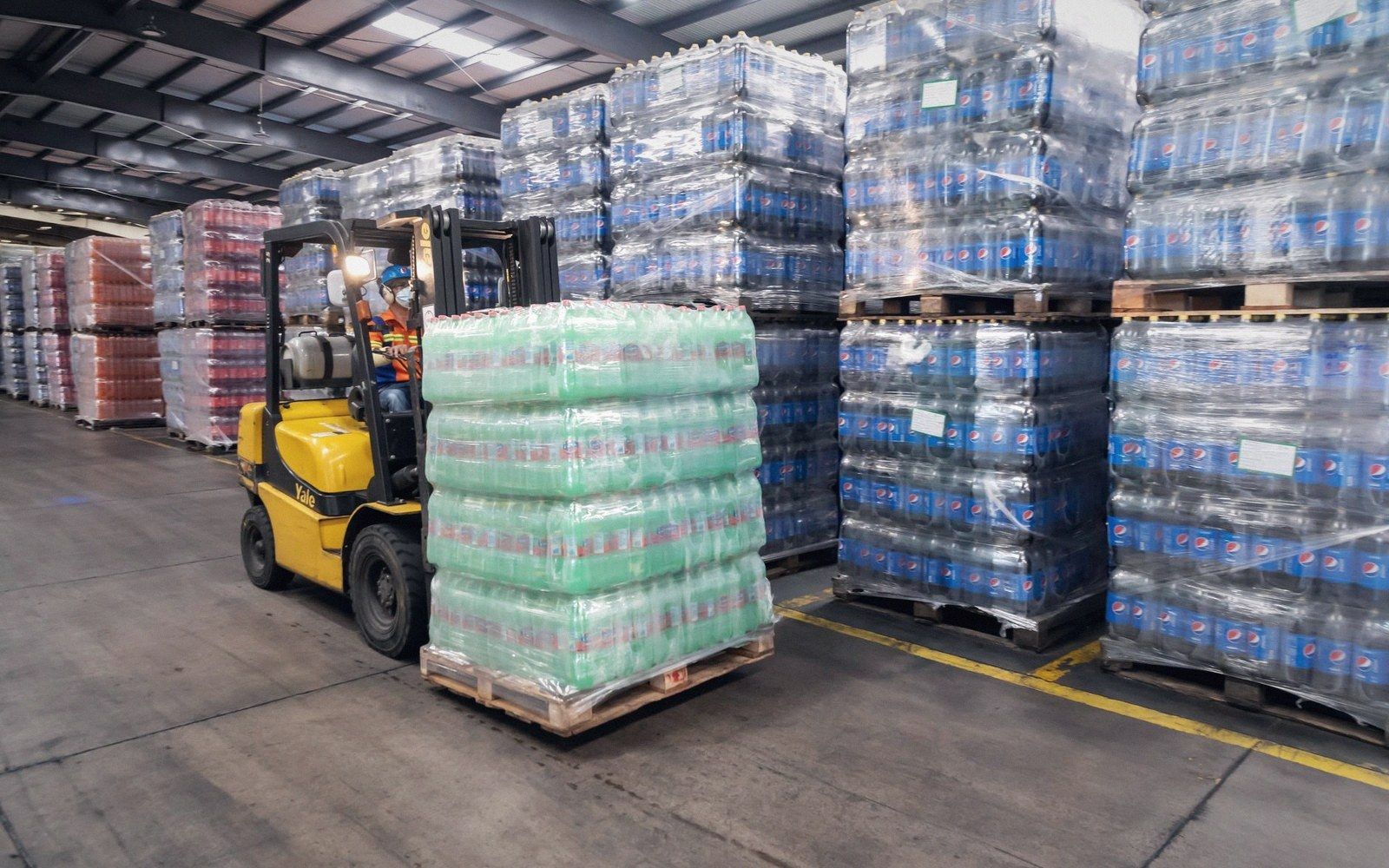
Booked by the hour, shared by the hall, and idle only while somebody else is paying.
Photo: Léster Lau / PexelsBooking the iron
Hall plant — forklifts, pump trucks, pallet jacks, scissor lifts — is contracted through the venue or a dedicated rigging and handling contractor, never brought in loose by a stand builder without prior approval. The machines are shared across every stand building simultaneously, which means booking windows are tight and non-negotiable. Miss your slot and the truss section sitting in the gangway becomes everyone else's problem.
Forklifts on a show floor are almost always counterbalance electric models — propane is prohibited in most enclosed halls because of fume accumulation. Capacity ratings matter: a machine rated at two tonnes at a standard load centre loses significant effective capacity as the forks extend or the load sits higher. Anyone specifying a lift for a heavy countertop section or a stacked modular tower needs to know the actual load geometry, not just the gross weight.
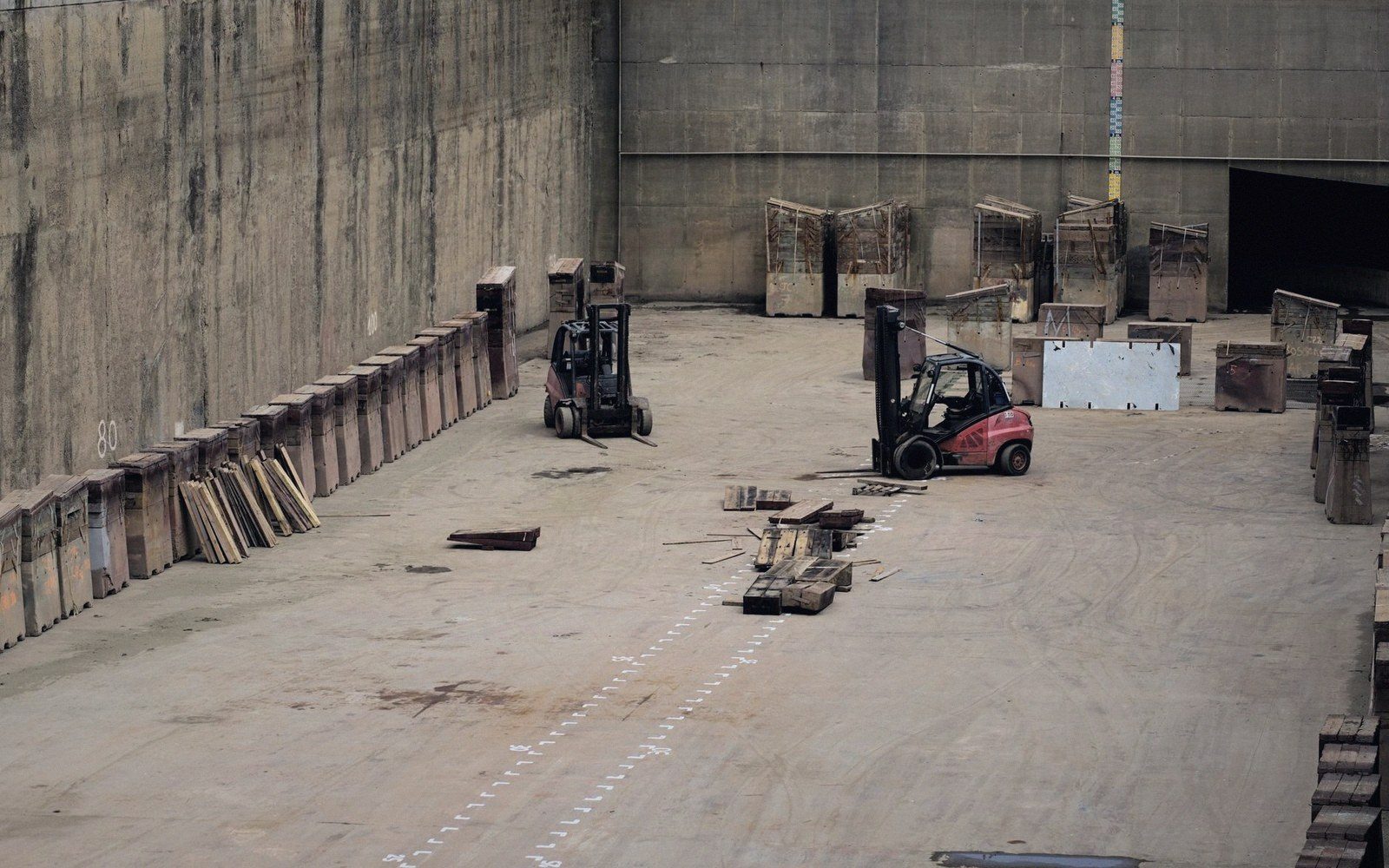 Fig. 02
The forklift lifting one crate is the machine another crew has waited ninety minutes for.
Photo: Richard REVEL / PexelsScissor lifts serve a different function: they put a person at height with both hands free, which is what electrical termination, rigging connections and banner attachment all need. They are not a crane substitute. Trying to manoeuvre a large graphic panel from a scissor platform is slow, awkward, and the kind of improvisation that damages the panel and the budget equally.
The bay scheduling constraint runs upstream of everything. Plant has to be on the floor before the loading bay closes to general freight, and the sequence — structure in first, graphics and finishes last — is partly driven by what the machines can physically reach once neighbouring stands start to close in.
Pump trucks and manual pallet jacks handle the horizontal movement once a crate is off the truck: they cost less per hour and need less clearance than a forklift. On a tight gangway or a stand with a raised deck, a pump truck is often the only machine that fits. The junction between machine movement and manual handling is where injuries happen, so the handover point — where the pump truck stops and the crew lifts — should be decided before load-in begins, not improvised under time pressure.
Flooring protection matters too. Most venues specify hard-surface protection — Masonite or similar board runs — under any machine movement, and that protection is part of the contractor's cost and responsibility, not something discovered at the damage-deposit stage.
Book the iron early, know its limits, and let it do the work it was built for.
The rule underneath all of it: heavy objects moved without the right machine are slow, dangerous, and usually more expensive once you account for the damage. Book the iron early, know its limits, and let it do the work it was built for.
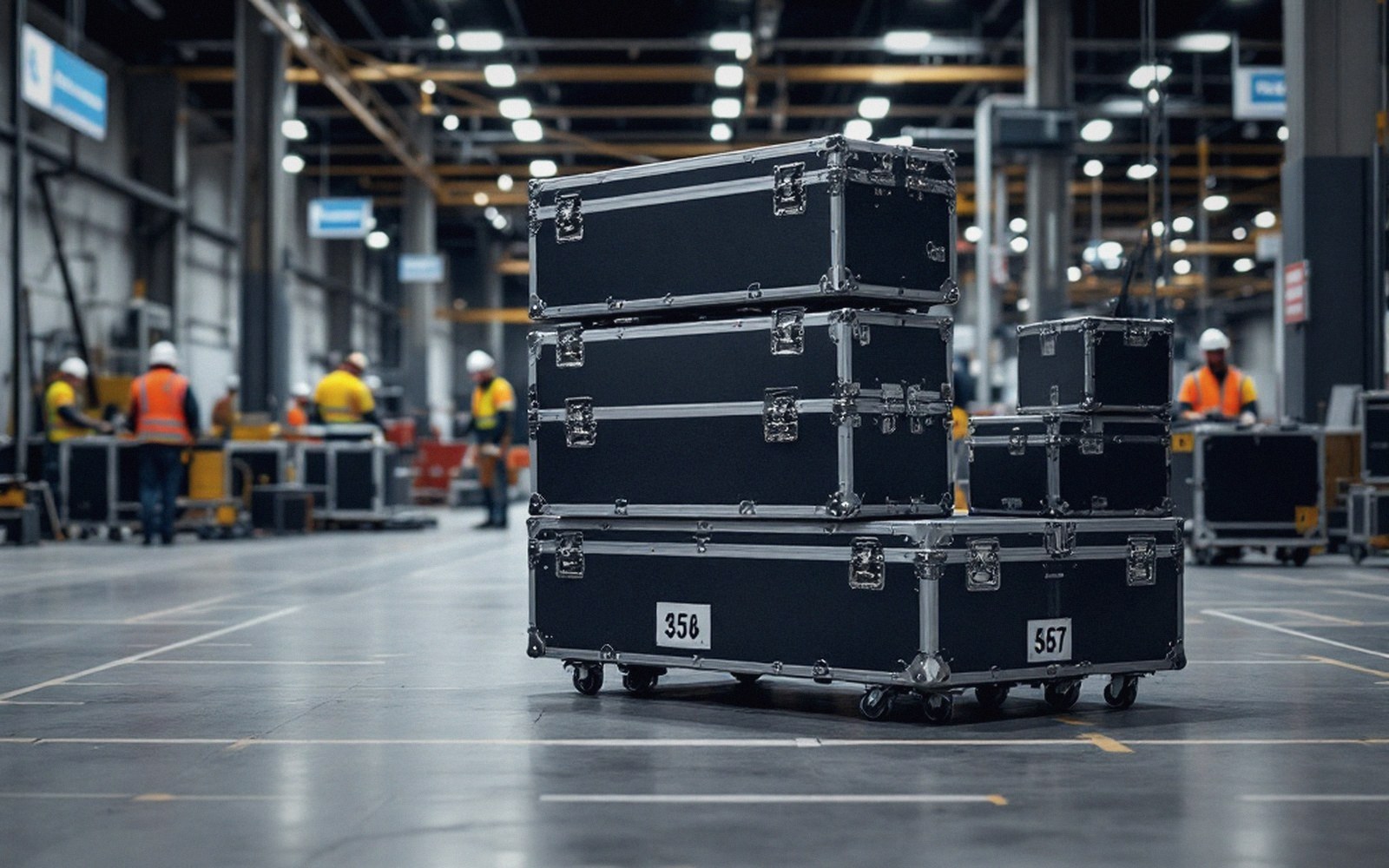
Wheels under the case are the cheapest alternative to plant.