Modular versus custom
Every structural decision is also a logistics decision. The frame that looks best might not be the frame that survives the build window.
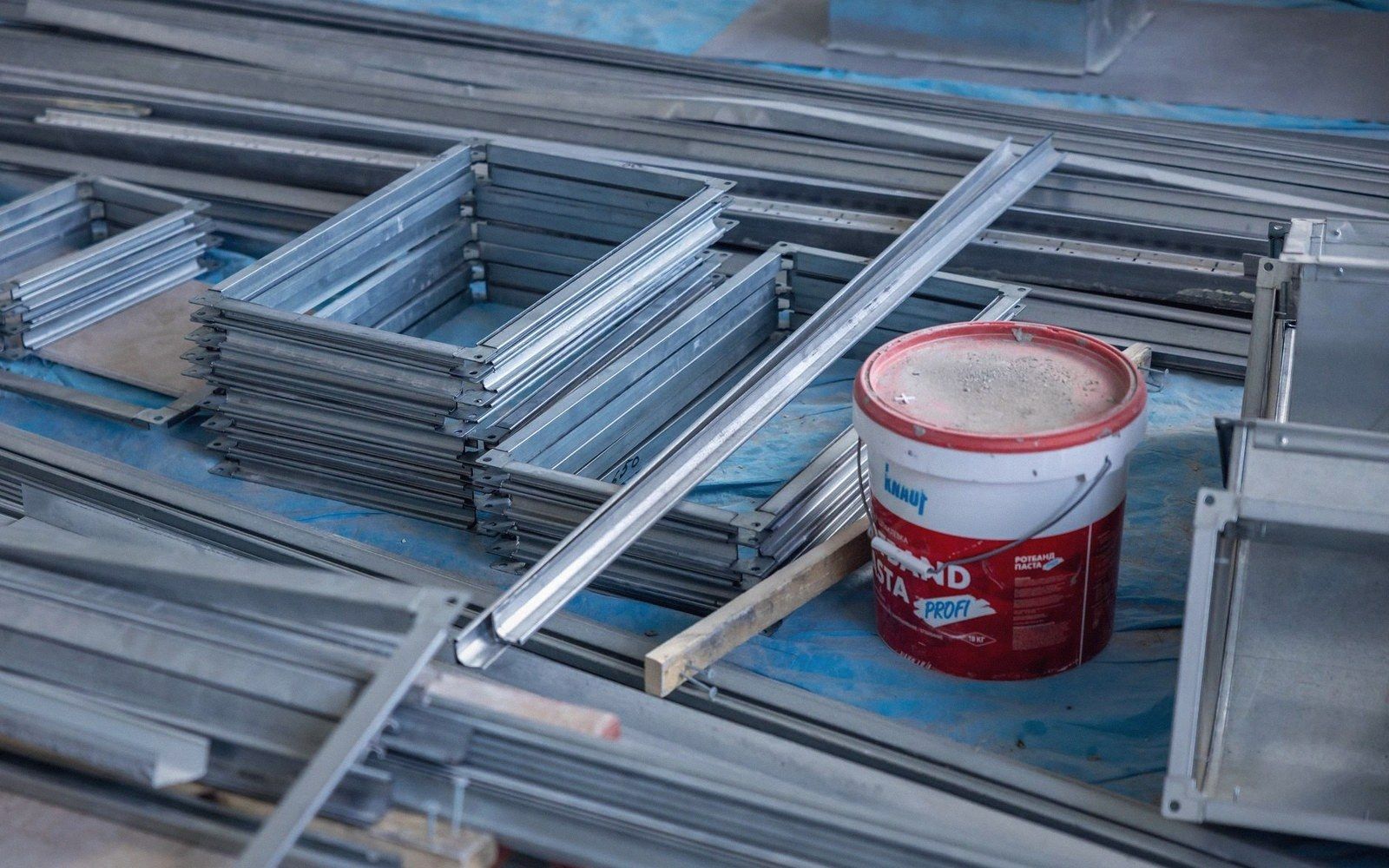
Rented system framing: one bay width, one node, and visibly standard from the aisle.
Photo: Sergei Starostin / PexelsThe case for system framing
Rented aluminium profile — octanorm, Maxima, and their many equivalents — exists because exhibition halls are full of contractors who have never met, working under a shared deadline. The system's genius is tolerability: connectors lock at prescribed angles, panels drop into pre-routed slots, and a team that has never handled this particular stand before can still assemble it from a drawing in a few hours. Lead time is measured in days, not weeks, because the stock is sitting in a hire company's warehouse. Damaged sections are swapped, not remade. At strike, everything reverses cleanly and goes back in numbered flight cases.
The cost of all that convenience is recognisability. System framing has a grammar, and visitors who walk exhibitions for a living read it instantly. The profile reveals itself at corners and capping strips. Height increments are standard. The proportions — dictated by available extrusion lengths and panel dimensions — tend toward the same geometry repeated across the hall. A well-designed system stand can be distinctive in its graphics and layout; it will not be distinctive in its bones.
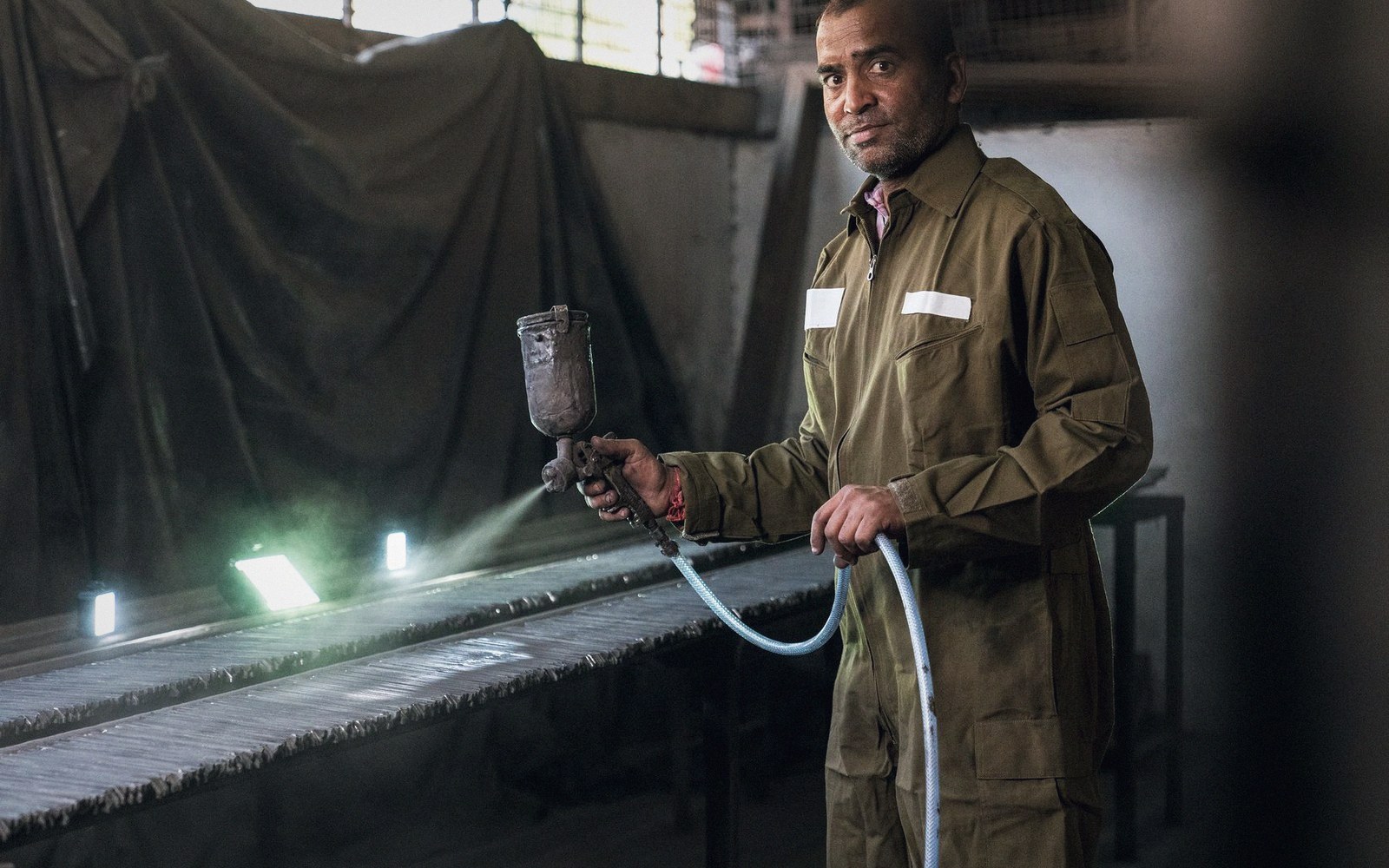 Fig. 02
Custom joinery is finished in a workshop, which is also where it has to be stored for the rest of the year.
Photo: Nishant Aneja / PexelsThere is also the question of adjustment. Because the frame is designed to be assembled and disassembled by many hands, its tolerances are set to accommodate hall floors that are not flat. That flexibility is a virtue during build, but it means the frame itself is not a precision object. It moves slightly. Fine joinery does not move, which is why the two approaches do not mix well.
The case for custom
Custom joinery — and custom metalwork, custom composites — has one primary virtue: it looks like nothing else, because it was made for nothing else. The forms are not constrained by available extrusion, the proportions are chosen rather than inherited, and the material itself can carry meaning. Timber, brushed steel, formed acrylic: each reads differently to a visitor at ten metres and differently again at arm's length.
The costs are structural in more than one sense. A piece of bespoke cabinetry takes weeks from brief to delivery. Any mistake in the site survey propagates into the finished piece, and the floor will not be flat when it arrives. Custom work requires careful shimming, scribing and sometimes remedial carpentry on site — skills that need to be in the build team and budgeted into the schedule. When something is wrong, there is no warehouse to call.
Then there is what happens at strike. Modular hire goes back; custom work has to go somewhere. It is built flat-pack or it is not, and that decision shapes both the design and the storage cost that follows every show. Structural panels that cannot be broken down economically either go into a warehouse for a long conversation about reuse, or they go to waste. The economics of custom over multiple shows only improve if the design was conceived for disassembly, which most are not.
Choosing between them, or choosing both
The practical answer in most medium-budget stands is hybrid: system framing for the infrastructure — walls, ceilings, partitions — and custom elements where the visitor's eye actually lands. A reception counter, a display plinth, a feature wall. The system does the heavy lifting; the bespoke piece carries the brand. This is not a compromise so much as a distribution of effort toward the moments that justify it.
What drives the decision, in the end, is not aesthetics but time and volume. A three-day build window changes what is possible; so does a stand that will travel to six shows in a year versus one that will be stripped and binned after a single event. System framing is an infrastructure choice. Custom is a communication choice. When the schedule is tight and the reuse argument is weak, the system wins on the floor even when the brief said otherwise.
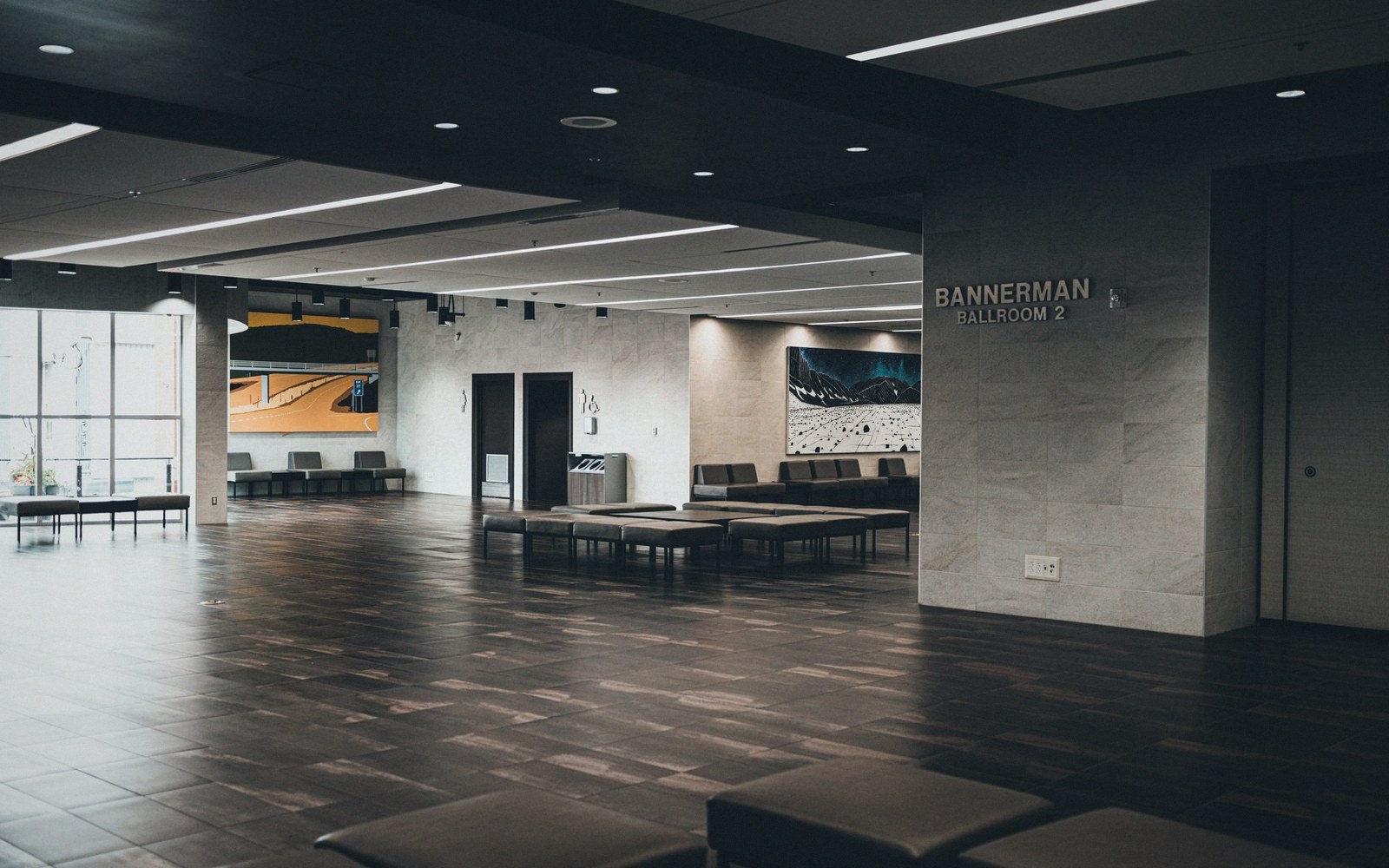
The plot before anything lands. A custom carcass fits this footprint exactly and no other.
Photo: Jonathan Cooper / Pexels