Carpet, and what it hides
The cheapest surface on the stand is also the most unforgiving at the seams.
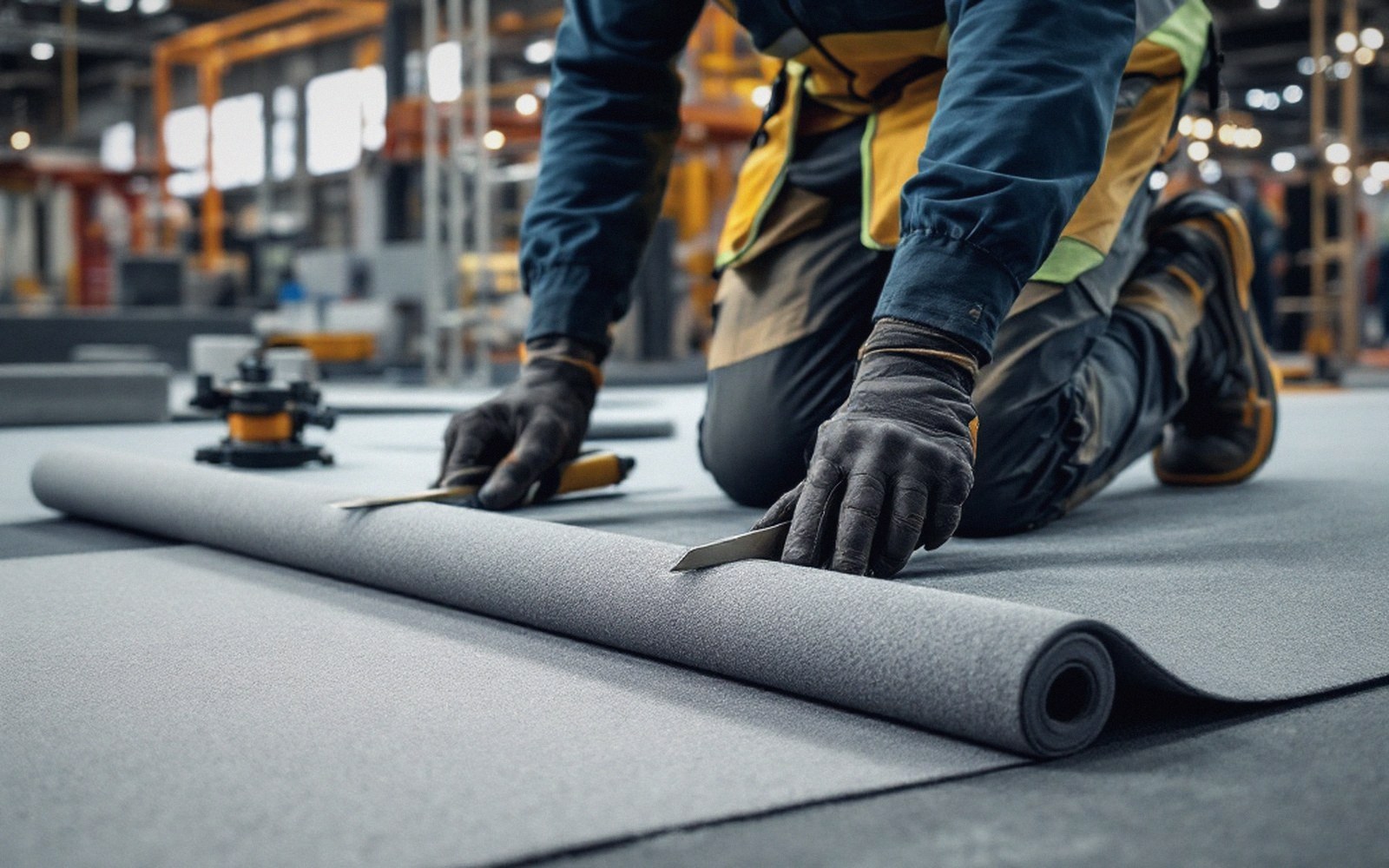
The cheapest surface on the stand, and the one that shows every seam and every tape line.
The logic and the trap
Carpet is the default exhibition floor finish for one reason: it is cheap, it goes down fast, and it covers the substrate without fuss. Foam-backed loop pile in a single colour can be laid over a raised deck or directly on the hall floor in less time than any other finish, and at a fraction of the material cost of vinyl planking, rubber tile, or hardwood laminate. Budgets converge on it.
The trap is that carpet reads every error underneath it. A deck board that is two millimetres proud telegraphs as a ridge underfoot and visually within minutes of the first foot traffic. A joint between panels that isn't tight shows as a shadow line in raking light — and hall light rakes constantly, from uplighters, from adjacent stands, from the building's own luminaires. The seam that looked invisible in a dimly lit workshop is a fault line on the show floor.

Joints are laid to fall away from the main approach rather than across it.
The seam problem has one real solution: run carpet in one piece wherever you can. On a stand up to about four metres wide, a single broadloom drop eliminates the issue entirely. Beyond that width you are cutting and joining, and the join must be planned — not improvised. Seams run parallel to the main visitor sightline, never across it. They are heat-welded or taped from below, never just butted. The pile direction of each drop is confirmed before cutting; reversed pile reads as a colour shift in exactly the light conditions you can't control.
Colour choice tightens all of this further. A mid-tone, low-contrast loop pile is the most forgiving surface on site: it hides the tape lines, absorbs minor misalignment, and compresses without marking. A dark, dense, cut-pile carpet in black or anthracite is chosen for its look and punishes every sin — footprints after the first hour, seams from the first minute, and any substrate irregularity that wasn't caught before laying.
What carpet genuinely hides well is everything structural: the cable troughs cut into the deck, the fixing bolts, the board edges where panels meet. That is its function within the raised floor system — concealment of infrastructure, not decoration. Decoration is a secondary benefit, delivered cheaply enough that most budgets can afford a colour specified to the brand rather than whatever the carpet hire company holds in stock.
The material is almost never reused. After three to five days of traffic it is compressed, stained at the edges, and too short to lay again without visible joins. It goes in the skip at strike and is costed accordingly from the outset.