Bay scheduling
Forty contractors, one loading bay, a fixed window. The sequence controls everything that follows.
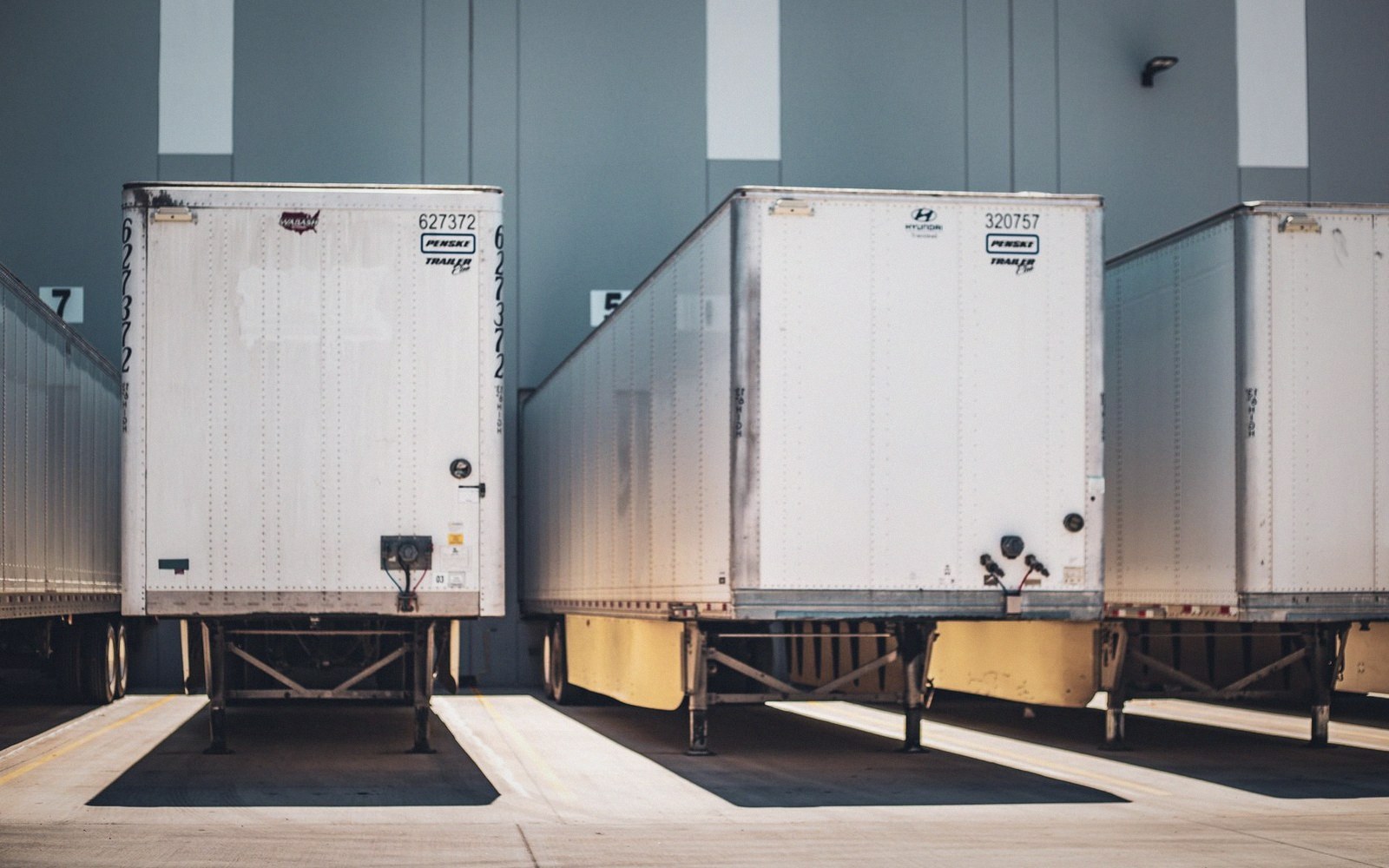
Mid-morning on the first build day: the queue is already out on the public road.
Photo: Tom Jackson / PexelsThe bay is the bottleneck
A venue loading bay looks generous in the floor plan and is catastrophically small in practice. On a typical multi-hall setup, anything from thirty to sixty separate contractors may need to move equipment through the same set of doors across a load-in window that the organiser will not extend. Forklift lanes are shared. Dock levellers are shared. The freight lift, if there is one, is shared. Every exhibitor's stand-build crew believes their crates are the urgent ones.
The result, on badly managed shows, is a queue of vehicles stretching back into the public road by mid-morning of the first build day, drivers accruing demurrage charges, and crews standing idle on the floor waiting for materials that are locked inside a truck that is locked behind two trucks that arrived in the wrong order. None of that is recoverable time.
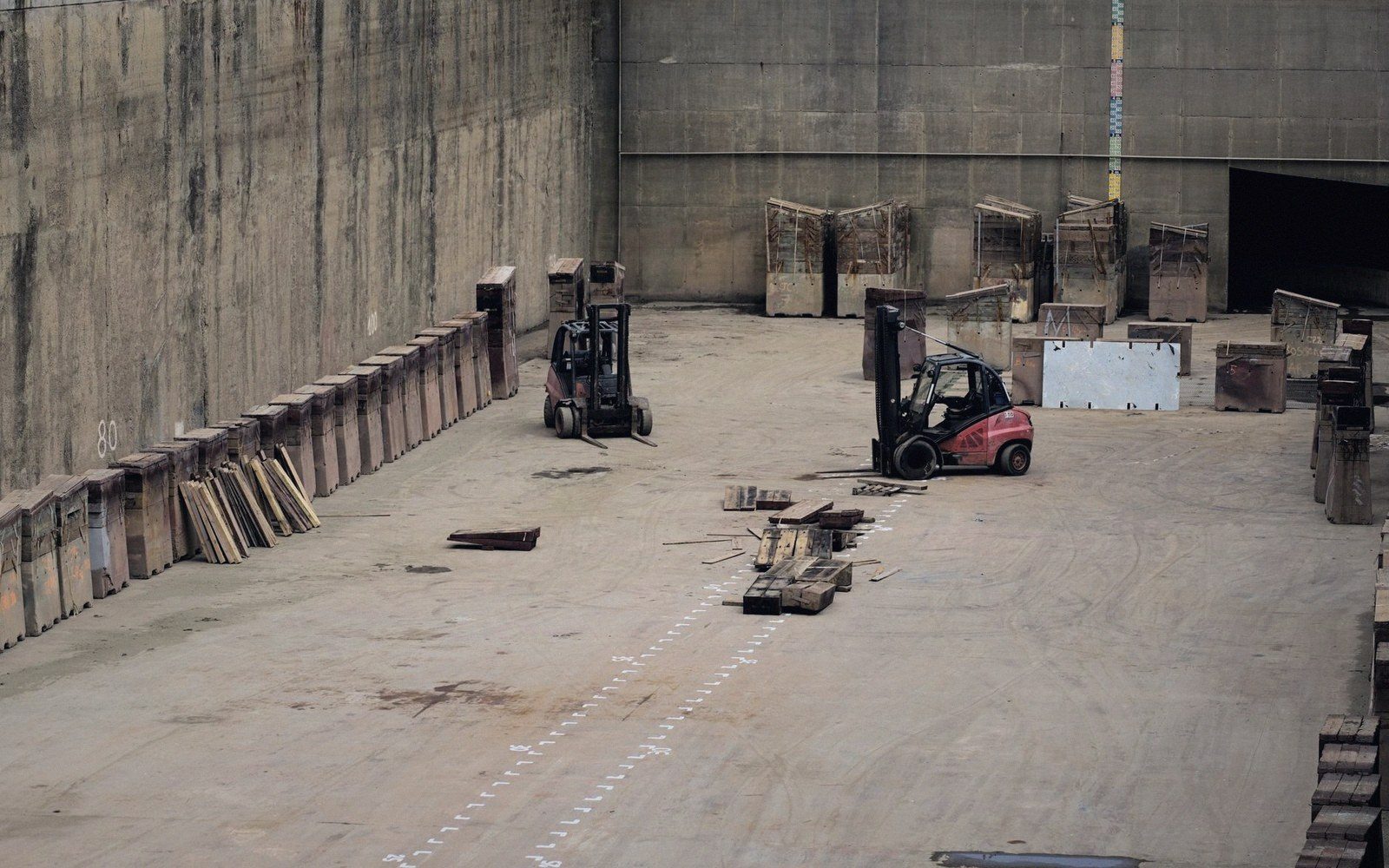 Fig. 02
A missed slot is not a late delivery. It is a place at the back of the queue.
Photo: Richard REVEL / PexelsThe bay schedule — the timed sequence allocating each contractor a slot or a zone — is the mechanism that prevents this. It is not a formality. It is the real design constraint of the load-in, and treating it as someone else's problem is how build teams end up working nights to catch what they lost in the morning.
How slots are assigned and where they break down
Organisers or venue logistics managers typically issue slot allocations some weeks before the show opens. Larger stands with heavier freight — steel, trussing, structural decking — generally receive priority slots early in the window, because their build sequences are longest and because heavy plant has its own booking logic. Smaller stands, shell schemes, and late additions tend to cluster toward the end of the window and pay the price: less bay access, more congestion, crews working in a hall that is already half-built around them.
The breakdowns happen at predictable points. A contractor who misses their slot because a vehicle was delayed in traffic does not get that slot back; they join the back of the queue, or they negotiate informally with whoever arrives early and is willing to wait. Vehicles that arrive oversized for the dock — a surprisingly common problem, because suppliers send what is available rather than what was specified — may have to park and hand-ball freight in from a loading zone at grade, which doubles the time and triples the labour. And when plant and forklifts are booked by the hour against the bay schedule rather than against the stand schedule, a missed slot means a rebooked machine and an idle crew.
Good contractors read the issued schedule and work backwards from it. If their allocated slot is mid-afternoon on day one and their structural frame needs to be upright before the rigging crew arrives the next morning, that back-calculation tells them exactly how much float they have — and whether they have any.
What the schedule forces you to decide early
The practical consequence of bay scheduling is that it pushes a series of decisions upstream that builders would often prefer to leave open. Crate contents have to be sequenced for unloading, not for packing convenience: whatever goes up first on the floor must come off the vehicle first, which means it was loaded last. Flight cases need to be numbered and manifested before the truck is sealed, because searching a loaded vehicle at the dock costs everyone time, including the next contractor in the queue.
Cable routes, raised decks, and any elements that will be inaccessible once the build progresses need their materials staged and ready before the first structural piece goes in. A deck substrate arriving in a second slot, after the perimeter frame is already up, means working in a confined space with restricted access — slower and more hazardous.
The bay schedule — the timed sequence allocating each contractor a slot or a zone — is the mechanism that prevents this.
The bay schedule is ultimately a forcing function. It compresses the design-and-sequence thinking that might otherwise drift through build-week into a set of hard deadlines that exist before the show floor opens. Builders who take it seriously tend to have stands that open on time. Builders who treat it as an approximate guideline tend to be the ones finishing at 2 a.m.
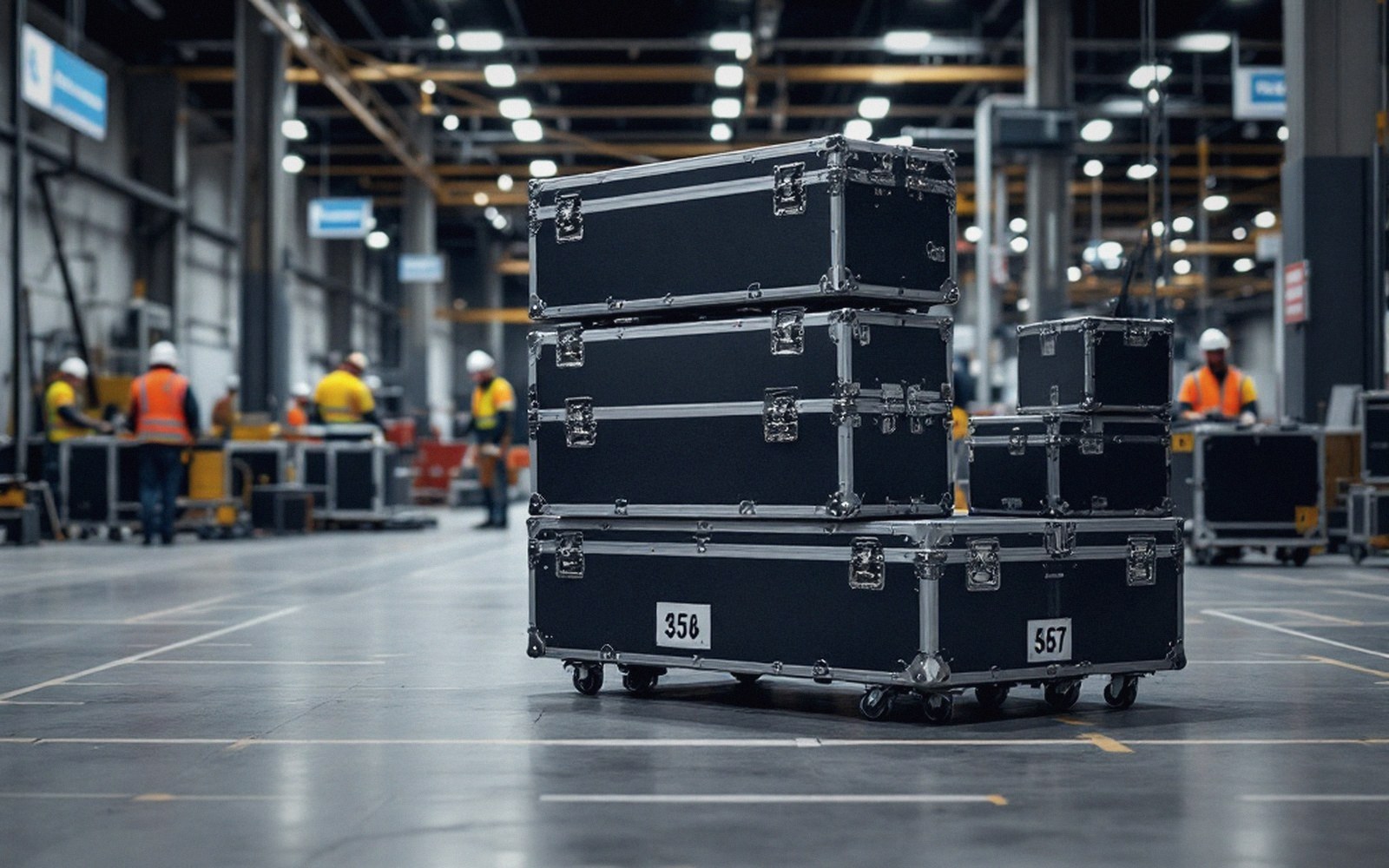
Cases are numbered and manifested before the truck is sealed: searching a loaded vehicle costs everyone behind it.