Flight cases

Built around the object, wheeled, numbered, and stored for the whole run of the show.
Built to be invisible once they're open
A flight case is a rigid, wheeled enclosure built to the exact outer dimensions of whatever it carries — a monitor, a lighting fixture, a custom centrepiece, a stack of graphic frames. The shell is almost always laminated plywood faced with high-impact polyethylene or ABS sheet, edged in aluminium extrusion, and cornered in die-cast zinc or steel. The interior is cut foam or vacuum-formed insert: the object drops in, tolerance is measured in millimetres, and nothing moves in transit.
That precision is the point. A stand component that travels in a generic cardboard carton arrives bruised or bent. A component that travels in a case built to its profile arrives ready to mount. The case absorbs the forklift jolt, the van floor vibration, the corner that clips a loading-bay pillar at 02:00.
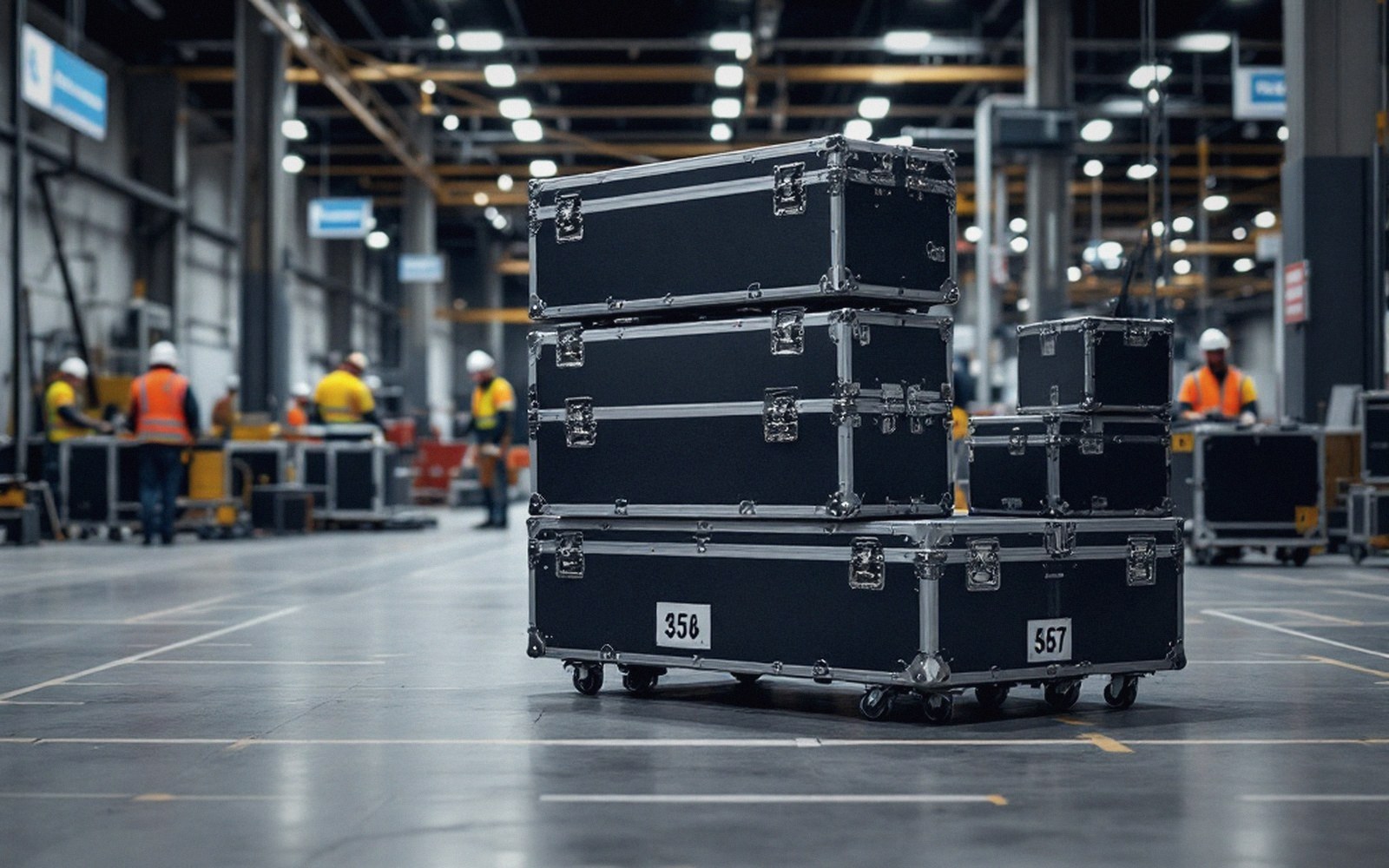 Fig. 02
Foam is cut for the fourth build rather than the first; by day two the case is a plinth.
Cases are numbered, not named. Every case in a set carries a stencilled or embossed number tied to a packing manifest: case 7 contains items 7.1 through 7.4, and those item numbers correspond to the build drawing. When the bay scheduling window is tight and three crews are unloading simultaneously, nobody is reading labels — they are reading numbers and moving to position.
Once the stand is up, the cases disappear into storage. Most venues allocate a caged or bonded area under the hall, sometimes called the case store or empty store, where empties are labelled, stacked and held for the duration. Access is controlled: you cannot retrieve a case mid-show without a reason, because the stacking is dense and the retrieval disrupts everything around it. The manifest tells you which case you need; the store supervisor tells you whether you can have it.
Strike reverses the logic. Cases come back out in reverse build order, items are packed to the manifest, lids are latched and the set is wheeled to the bay. A damaged case that fails its latch on the return journey is the stand builder's problem, not the carrier's — which is why case condition is checked at intake, not at departure, and any damage is logged before load-in begins.
A good flight case outlives the stand it was built for by years.
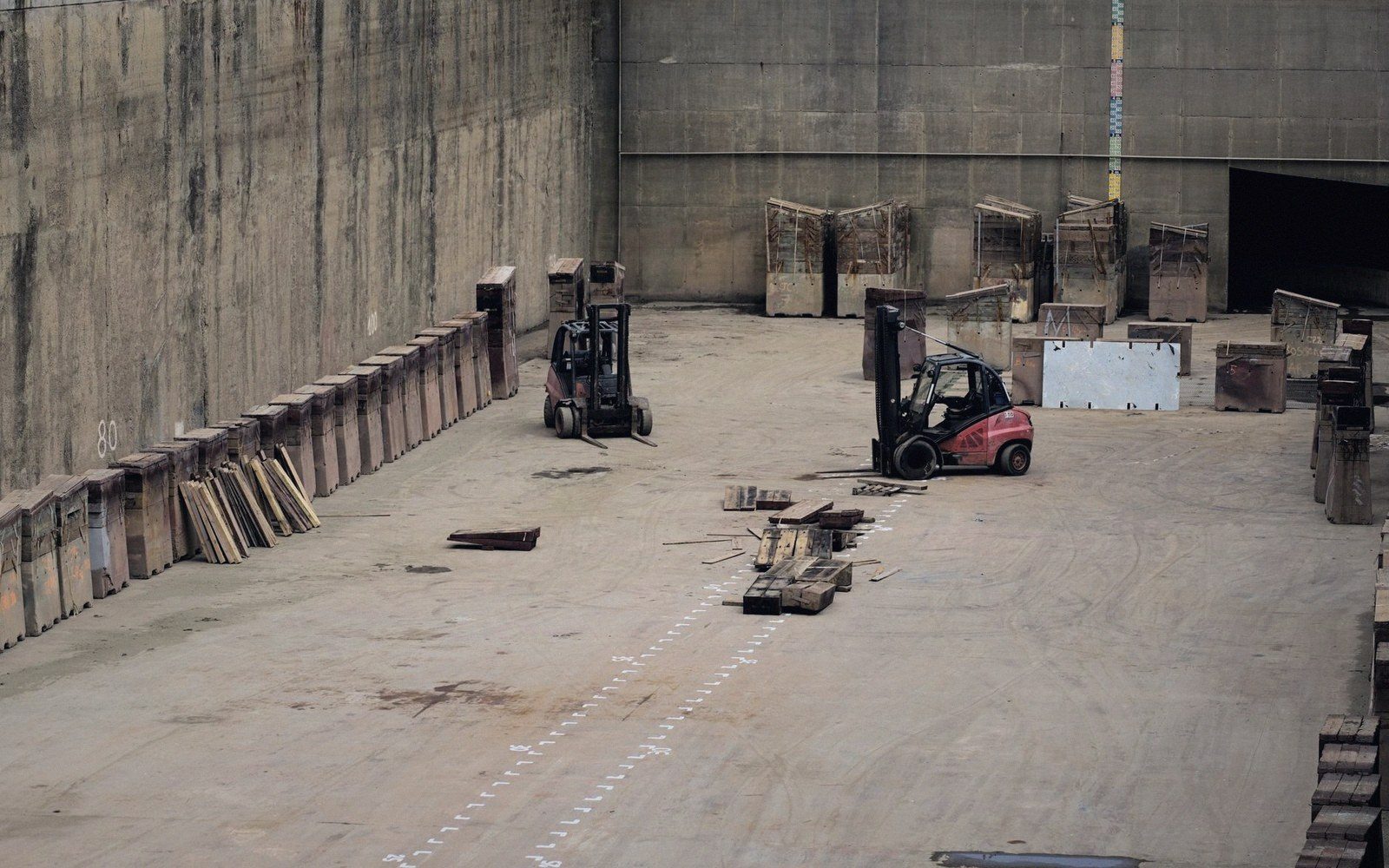
Case volume, not weight, decides how many vehicles a stand needs.
Photo: Richard REVEL / Pexels